Note 015Business Systems1 min read
What a management dashboard should show
A good dashboard answers the questions a manager asks every morning. How to decide what goes on it, and what to leave off.
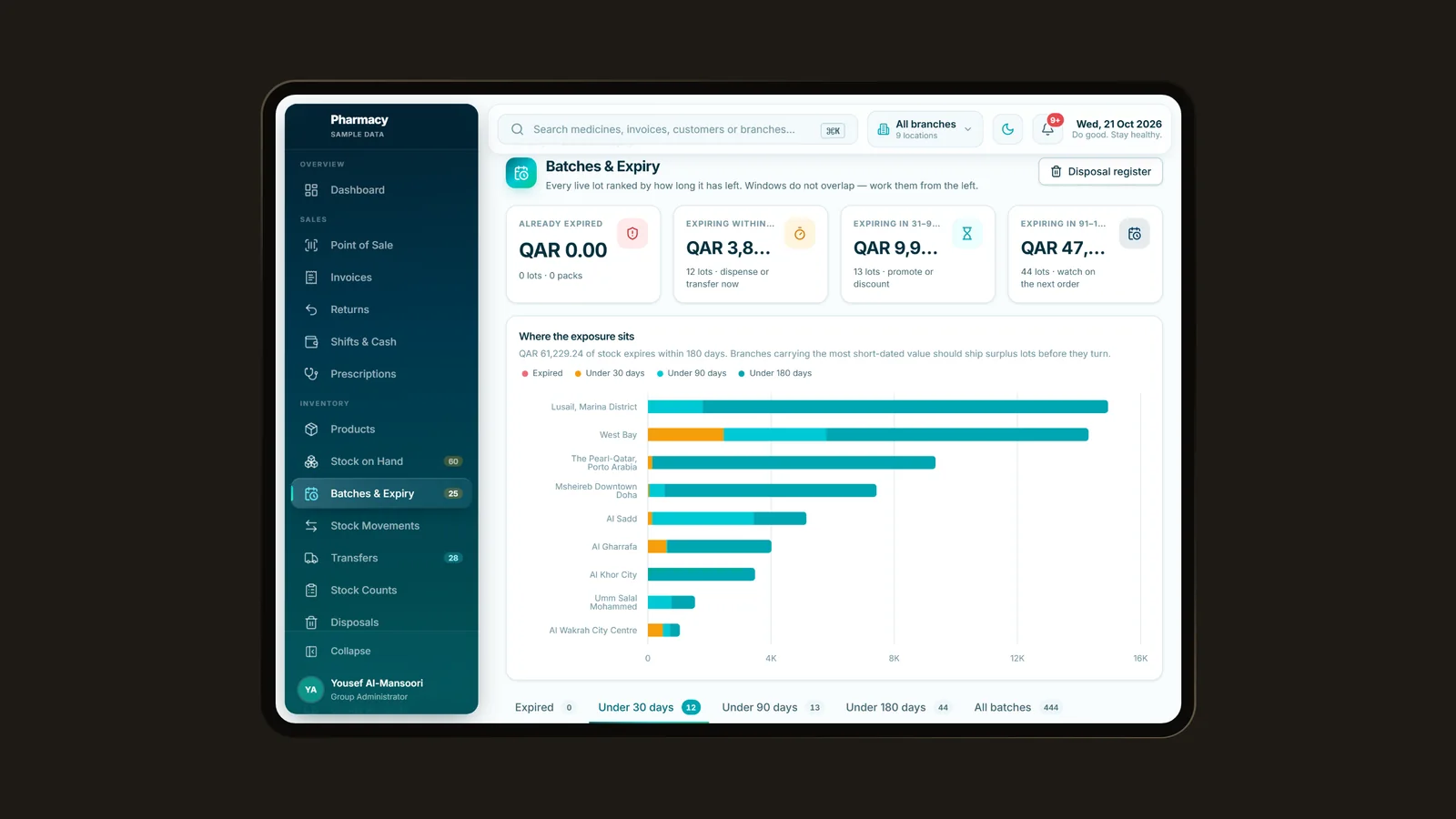
A dashboard is the first screen a manager sees. When it works, it answers the questions they would otherwise ask their team every morning. When it does not, it is a wall of charts that everyone learns to ignore.
Start from questions, not charts
Write down the questions that matter: how much did we sell this week, which orders are late, which members have not come back, what is running low. Each question becomes a number or a list on the screen. Anything that does not answer a question does not belong there.
A few numbers, clearly
- The handful of numbers that say whether today is normal
- What needs attention now: overdue, unpaid, out of stock
- How this period compares with the last one
- A way into the detail behind every number
One source of truth
A dashboard is only as good as the data under it. If the numbers are copied in from several spreadsheets, they will disagree. The best dashboards sit on top of the system the business already runs on, so the numbers update as the work is done. See Outgrowing spreadsheets.
Different people, different screens
An owner, a manager and a member of staff need different things. A good system shows each role its own view, rather than one screen that tries to serve everyone.
Built for the operation
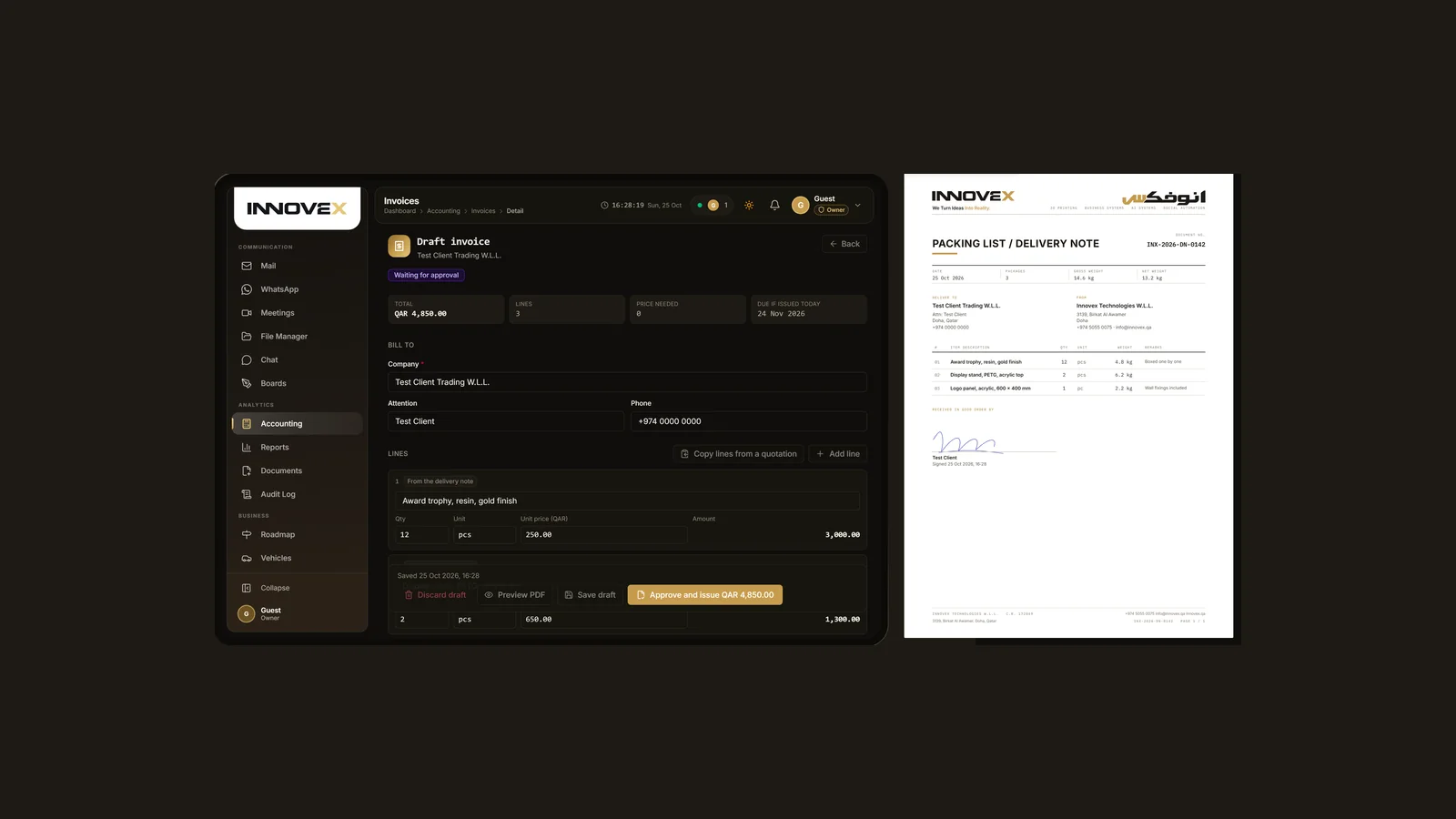
We build dashboards for one operation at a time, like the gym and pharmacy management systems on this site, around the numbers that matter to that business rather than a template.
Follow the studio
The work in these notes, as it is made: pieces off the printers, systems going live.