Note 020AI1 min read
Systems that run on their own
How an autonomous system watches data and acts within the limits a business sets, so routine checks stop waiting for a person and decisions stay with one.
Much of the work in an operation is checking: is the stock low, are conditions safe, has the payment arrived, did the delivery leave. Each check is simple, but someone has to remember to do it, and nothing happens while they are busy elsewhere. An autonomous system does the checking itself.
Watch, decide, act
An autonomous system follows data as it arrives, from sensors, from other systems or from forms, and compares it with rules the business sets. When something crosses a line, it acts: it raises an alert, tells the right person, creates a task or starts the next step on its own.
An example: a print farm that watches itself
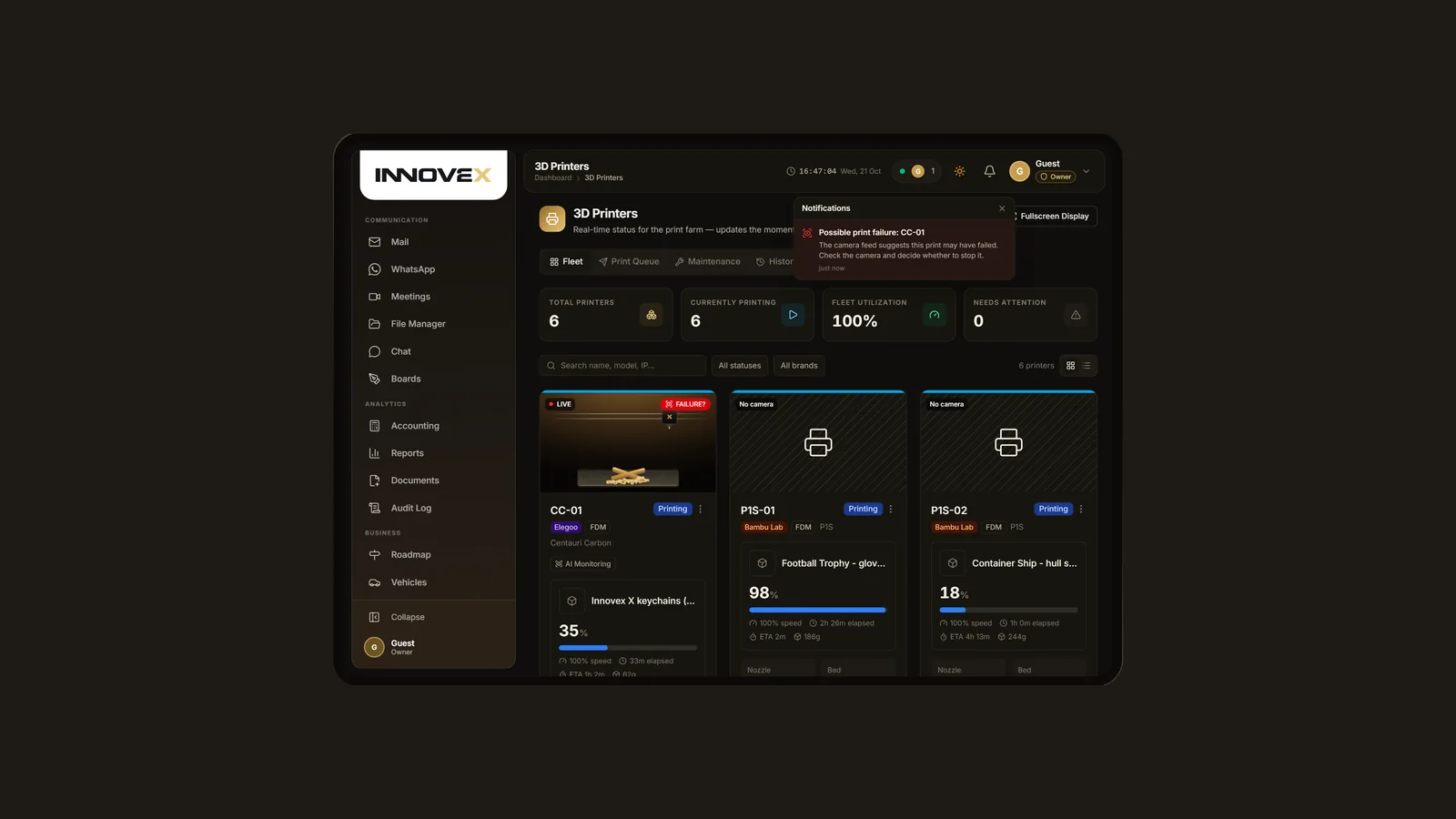
In the studio's own print farm, pictured, every printer reports through the workshop bridge, and one sliced file goes to every printer that can take it, released one at a time so the workshop stays under its circuit. While a job runs, an AI check looks at the camera. When a print has likely failed it tells the team, and a person looks and decides whether to stop it: the AI never stops a print on its own.
Where AI comes in
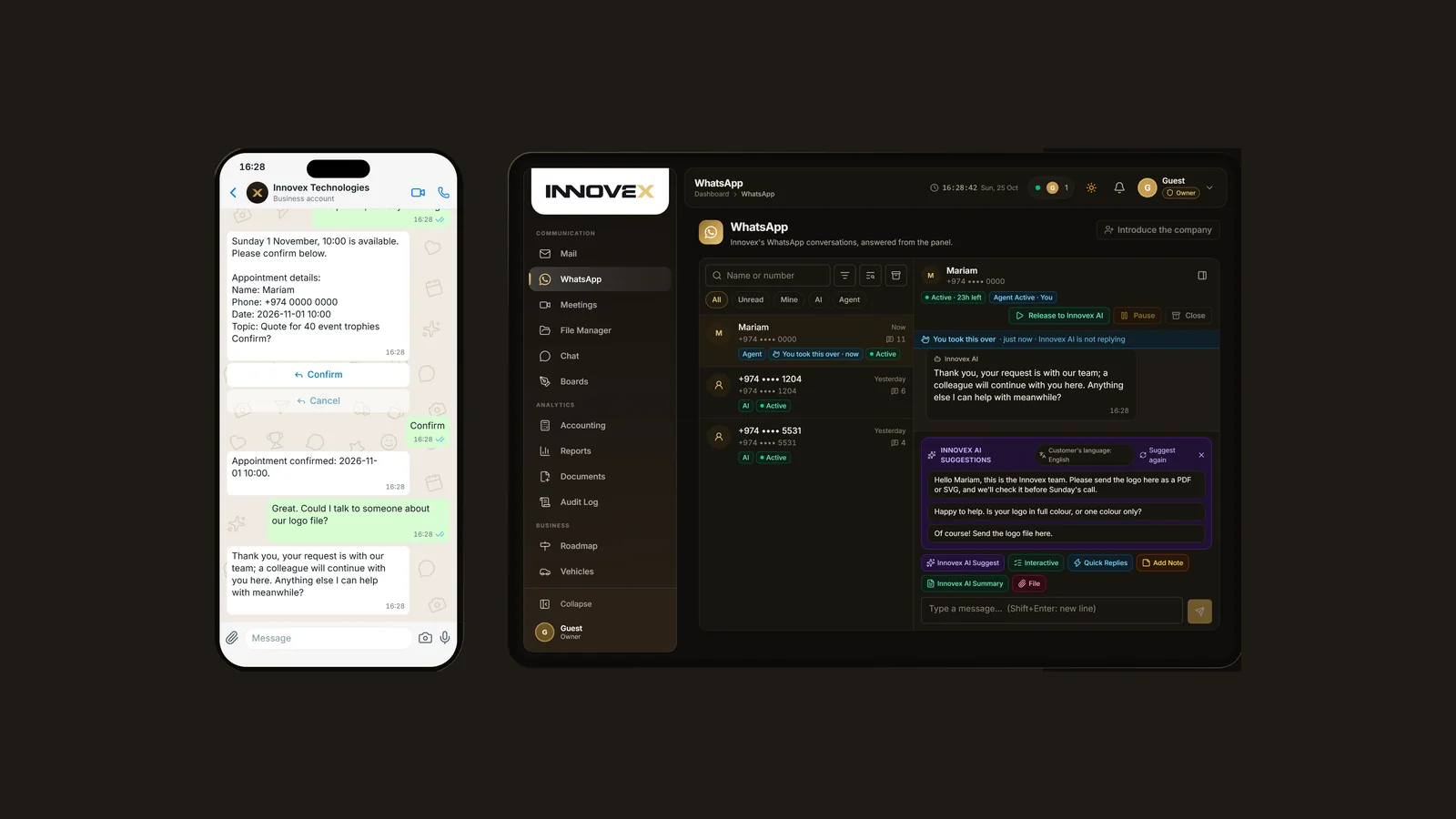
Rules handle the clear cases. AI helps with the unclear ones: reading a message to decide what it is about, spotting a pattern no single rule would catch, or summarising what happened overnight for the morning shift.
People stay in charge
An autonomous system should make the routine disappear, not the people. It acts within limits the business sets, records everything it does, and hands anything unusual to a person.
For the other half of the picture, the assistants that answer questions, see What AI can actually automate.
Follow the studio
The work in these notes, as it is made: pieces off the printers, systems going live.